Upcoming Workshops
This Month’s Workshop:
From Exercises to Songs
When: Monday, June 1st
Time: 7:15pm
Where: Online Zoom
Next Month’s Workshop:
How Songs Are Built
When: Monday, June 29th
Time: 7:15pm
Where: Online Zoom
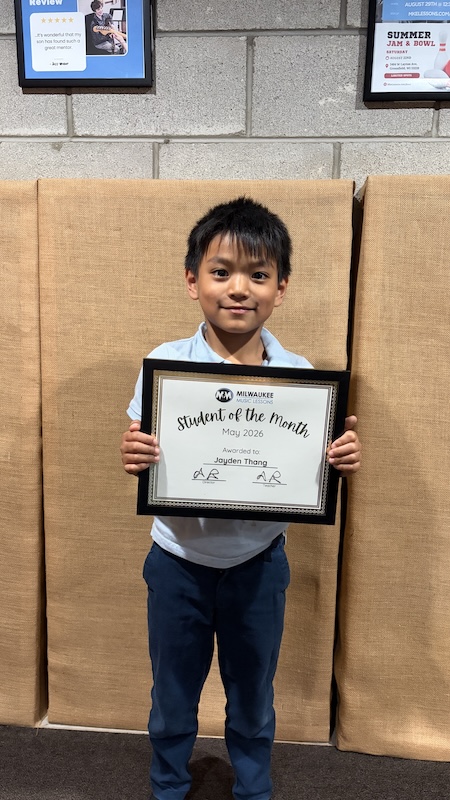
Student of the Month
During recital season, students are challenged more than usual. It’s an amazing test of will, perseverance, and dedication. There’s always a couple of students who work extra hard and stand out. This season, Jayden was one of those students and that’s why he gets the nod as our student of the month for May.
Congrats Jayden, keep up the amazing work!
Name: Jayden
Instrument: Piano
Time With Us: 8 Months
Favorite Song We’ve Learned So Far: Yankee Doodle
Dream Song To Learn: 10,000 Reasons
Message from Mom: “I am so proud to see Jayden practicing his piano without being asked, which is a big change from how it used to be. Sometimes we wake up to the sound of him playing ‘Yankee Doodle’ or ‘Twinkle, Twinkle, Little Star’ before we even get out of bed.”
Alex’s Cool Music Gear of the Month
Some music gear is huge, expensive, and hard to miss. Other gear is small, simple, and way cooler than it looks at first. A tambourine hi-hat attachment is one of those little gadgets that can make a drum set sound more fun almost right away.
So what is it? It is a small tambourine that attaches to the hi-hat stand on a drum kit. When the drummer plays the hi-hat with their foot or sticks, the tambourine jingles along with it. This adds a bright, shaky sound that can make a beat feel more exciting. You have probably heard this kind of sound in rock, pop, country, worship, and even some funk music.
The cool part is that the drummer does not have to learn a whole new instrument to use it. It works with what they are already doing. A basic groove can suddenly sound bigger, fuller, and more “record-like.” For students, it can also make practicing beats feel more fun because they get a new sound without changing everything about how they play.
This is also the kind of gear that is fun for non-drummers to notice. Parents might hear it and think, “Oh, that little thing is adding all that sound?” Adult students might see it and think, “That’s a neat little add-on I could actually afford.” It is not the most important piece of gear in the world, but it is a great reminder that small tools can inspire new ideas.
A tambourine hi-hat attachment is simple, useful, and just plain fun. It shows students that music gear does not always have to be complicated to be creative. Sometimes one small gadget can make the whole band feel a little more alive.

July Studio Break
The studio will be closed July 3rd-9th. During this time there are no lessons and no makeups for these weekly times.
This is part of our normal studio schedule where we take 4 weeks of during the year.
We hope everyone has a happy 4th of July!
Spring Recital
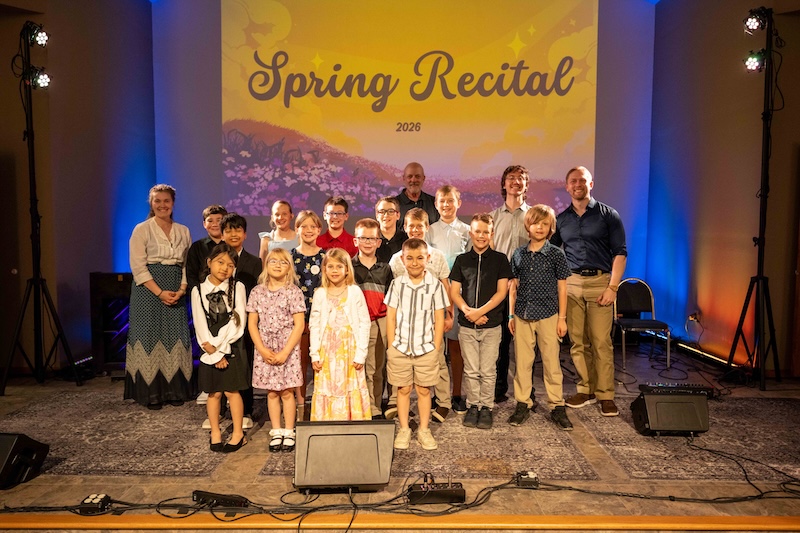
May 16th marked our third recital and it was our biggest to date. We had lots of new performers and and plenty of performers who were with us for all three.
In total, 46 kids took the stage and they all performed wonderfully!
We are so incredibly proud of everyone came out and we are thankful to the families who bring their kids to our studio.
Keep up the great work and we’ll see you at the next one!


Our First Adults Open Jam
May 9th gave us our first open jam. We held it for all students 16+ and had a full roster with 15 performers.
For most here, it was their first ever experience in a band.
Everyone who came was prepared and did an amazing job. They worked well as a team and were very supportive of each other.
Overall, we had a great time, made some friends, and learned a lot together.
Thank you to all the students and teachers who made this day possible.


Announcement: Our Summer Bowl & Jam!
Over the past year, many of you have asked for:
A recital that feels more relaxed and just‑for‑fun
More chances to perform, not just in May and November
So this year we’re adding something brand new:
On Saturday, August 22, we’re hosting our first‑ever Summer Jam & Bowl Recital at Classic Lanes in Greenfield.
When: Saturday, August 22, 1:00–3:00 pm
Check‑in: 12:30 pm (for shoes, lane assignments, and getting settled)
Where: Classic Lanes, 5404 W Layton Ave, Greenfield, WI 53220
Students will:
Bowl with friends
Perform one song in a relaxed, supportive environment
Cheer for other students while they play
No fancy outfits. No formal program. Just a fun summer afternoon to celebrate how far they’ve come.
For more information, CLICK HERE.

Announcement: Summer Open Jam At Paulie's
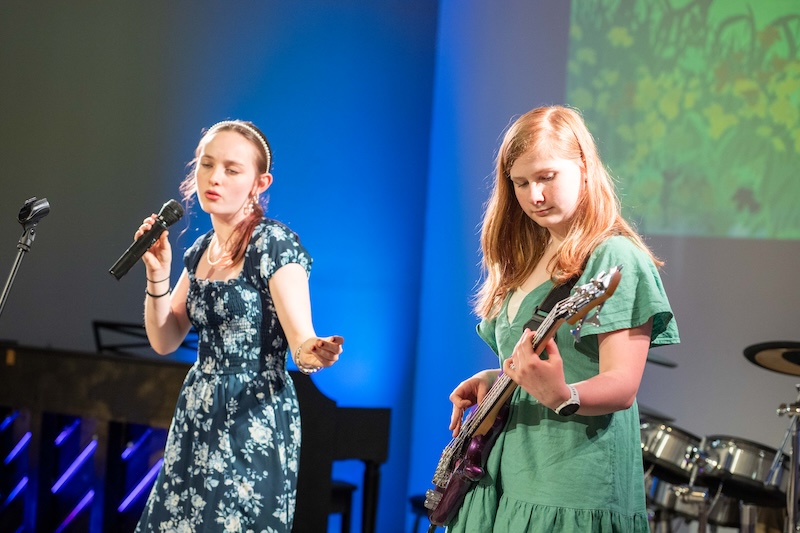
If you’ve ever wanted to experience what it’s like to perform with other musicians, this is the perfect opportunity. Low pressure, in a fun environment, and with a group of other encouraging and learning musicians like yourself.
We’ve partnered with Paulie’s Pub to create an incredible stage and environment.
It’s all happening on May 29th at 12:30pm.
Come and jam with the band or just hang out with the community.
To find more info, CLICK HERE.

Practice Strategy Cards
Practice makes perfect. But if you don’t know how to practice, you’re going to have a hard time making improvements.
So we’ve done some of the work for you and built a blueprint for how to practice. We have one for guitar, drums, piano, and voice.
If you’re a member, you can pick up your free postcard in the studio.
Put it on your wall or in your practice space and make the most out of your time.
Guitar Spotlight: Power Chords to Full Chords
The guitar fretboard can look overwhelming at first. There are many strings, many frets, and the same notes appear in different places. The good news is that you do not need to memorize the entire fretboard all at once. Strong guitar players learn it piece by piece.
For beginners, start by finding notes on one string. A great place to begin is the low E string. Learn where notes like G, A, and C live. For example, the 3rd fret is G and the 5th fret is A. Moving up and down one string helps you understand how notes are organized instead of just guessing.
As you improve, you will begin noticing patterns. One of the most useful patterns is the octave shape. For example, if you play a note on the 3rd fret of the low E string, the octave is two strings down and two frets higher. This helps you find the same note in different places without starting over every time.
At the intermediate level, position shifts become important. Instead of staying in one small area, your hand begins moving smoothly across the neck. You may play a melody near the 3rd fret, then shift to the 5th or 7th position without losing your place. Learning these small movements makes the fretboard feel connected instead of random.
When practicing, focus on understanding patterns rather than memorizing everything at once. Learn a few notes clearly, then slowly expand from there. The fretboard becomes much easier when you stop treating it like a giant puzzle and start seeing the shapes and relationships inside it.
Piano Spotlight: Making the Left Hand Useful
For many piano students, the right hand gets most of the attention. It often plays the melody, so it feels more important at first. But the left hand has a big job too. It helps give the music support, rhythm, and depth.
For beginners, the left hand can start very simple. It might play one low note at a time, like a C while the right hand plays a melody. Even one steady bass note can make the music feel fuller. The goal is not to make the left hand busy. The goal is to make it helpful.
As students improve, the left hand can add basic patterns. Instead of holding one note, it may move between a bass note and a chord. This gives the song more motion. A simple pattern like C, then G, then C again can make the music feel more steady and complete.
At the intermediate level, left hand patterns become more interesting. Alberti bass uses broken chord notes in a repeating pattern, often low, high, middle, high. Stride piano moves between a low bass note and a higher chord. Pop patterns often use steady broken chords to support the melody without getting in the way.
When practicing, start with a simple left hand part and keep it steady. Make sure it supports the right hand instead of overpowering it. A strong left hand does not need to be fancy. It just needs to be steady, clear, and musical. When the left hand works well, the whole song feels stronger.
Drum Spotlight: Understanding Drum Notation Without Fear
Drum notation can look scary at first. There are notes, stems, rests, and different spaces for each drum or cymbal. But drum music is not as mysterious as it looks. It is simply a map that tells you what to play and when to play it.
For beginners, the best place to start is basic rhythms. A note may tell you to hit the snare, kick, or hi-hat. The most important part is counting the beat. For example, a simple rock beat may have the kick on beats one and three, the snare on two and four, and steady hi-hat notes through the whole measure.
As students improve, they begin to read more than one part at a time. The hi-hat might play steady notes while the kick and snare move around underneath. This can feel tricky, but it becomes easier when you read one layer at a time. Start with the hi-hat, then add the snare, then add the kick.
At the intermediate level, notation helps with complex rhythms and song form. You may see rests, ties, fills, repeat signs, or sections like verse and chorus. These markings help you understand the whole song, not just one beat. Reading form helps drummers know when to stay steady, when to build energy, and when to change patterns.
When practicing drum notation, slow down and count out loud. Clap or tap the rhythm before playing it on the kit. Do not try to read everything at once. Drum notation becomes much easier when you break it into small parts, and it can make you a much more confident and prepared drummer.
Vocal Spotlight: Confidence While Singing
Singing can feel personal because your body is the instrument. Many students feel nervous when they hear their own voice. That is normal. Confidence does not mean you never feel unsure. It means you keep singing while you build trust in your voice.
For beginners, confidence often starts with singing alone. Practice in a quiet place where you feel comfortable. Start with simple songs or short vocal exercises. You do not need to sing loudly at first. The goal is to get used to hearing your own voice without judging every sound.
As you grow, confidence comes from repetition. A song feels safer when you have sung it many times. Practice small sections until they feel steady. Then connect them together. The more familiar the song becomes, the easier it is to relax and focus on the music instead of fear.
At the intermediate level, confidence becomes part of expression. Singing is not just about hitting the right notes. It is also about telling the story of the song. Think about the words, the mood, and the message. A confident singer connects with the music, not just the sound.
When practicing, stay patient and kind with yourself. Record short clips, listen back calmly, and notice what improved. Confidence grows through small wins, steady practice, and honest effort. The more comfortable you become with your own voice, the more natural and meaningful your singing will feel.
General Music: Why Progress Feels Slow Before It Shows
Music progress can feel slow at first. You may practice a song, scale, or rhythm and still feel like nothing is changing. But progress often happens before you can hear it clearly. Your hands, ears, voice, and brain are all learning in small steps.
For beginners, the best thing to look for is small improvement. Maybe one chord sounds cleaner. Maybe one rhythm feels less confusing. Maybe you can play a short section without stopping. These wins may seem tiny, but they are proof that your skills are growing.
As students keep going, progress can feel uneven. Some weeks feel great, and other weeks feel stuck. That is normal. Learning music is not a straight line. Often, you spend time building control quietly before a bigger breakthrough shows up.
At the intermediate level, plateaus are part of the process. A plateau is when you keep practicing but do not feel much change right away. This does not mean practice is failing. It often means your brain is sorting out harder skills, like smoother timing, better tone, cleaner technique, or stronger confidence.
When practicing, do not only judge progress by how you feel that day. Look back over a few weeks or months. Record yourself, write down small goals, and notice what feels easier than before. Progress may feel slow in the moment, but with patience and consistency, it always starts to show.
Student Milestones
1 Month
Antonio B.
Amy S.
Rafael T.
3 Months
Naomi H.
Nolan P.
Riley H.
Hannah B.
Sarrah N.
6 Months
Nadia R.
Lauren A.
9 Months
Maddison K.
Ava C.
Ethan W.
Josh W.
Bailey W.
Loki S.
Ralph N.
Max W.
Josiah S.
Malakai F.
Danny W.
Charlie K.
Joey D.
Ethan K.
Emily G.
Lucy S.
Fina S.
Allison N.
Willow G.
Morgan M.
Lauren M.
Paislee P.
Kaitlyn C.
Autumn U.
Owen U.
Adam D.
Oliver K.
Leah M.
Claire S.
Winston H.
Isaiah G.
Hayden H.
1 Year
Eli G.
18 Months
Sebastian P.
More News