Upcoming Workshops
This Month’s Workshop:
Ear Training: How To Hear Melody and Chords Clearly
When: Monday, March 30th
Time: 7pm
Where: Online Zoom
Next Month’s Workshop:
Dynamics: Playing with Feeling
When: Monday, May 4th
Time: 7:15pm
Where: Online Zoom
Student of the Month
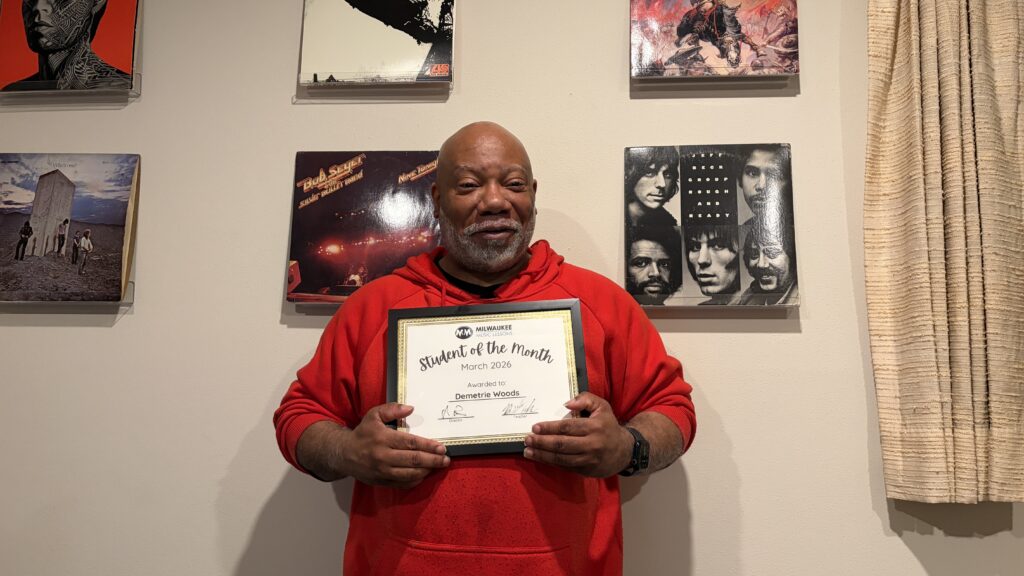
Many people walk through our doors and every so often you get someone who you know is all in. They are putting every bit of passion and energy they have into their lessons and their instrument. Demetrie is one of those people. In his short time here, he’s shown how much work and effort he has put in. We’re proud to have him with us and we can’t wait to see everything that he accomplishes!
Name: Demetrie
Instrument: Piano
Time With Us: 3 Months
Favorite Song We’ve Learned So Far: 12 bar blues progression
Dream Song To Learn: Songs lol
Blues any
Lucy & Linus
There’ s many more
Spring Break
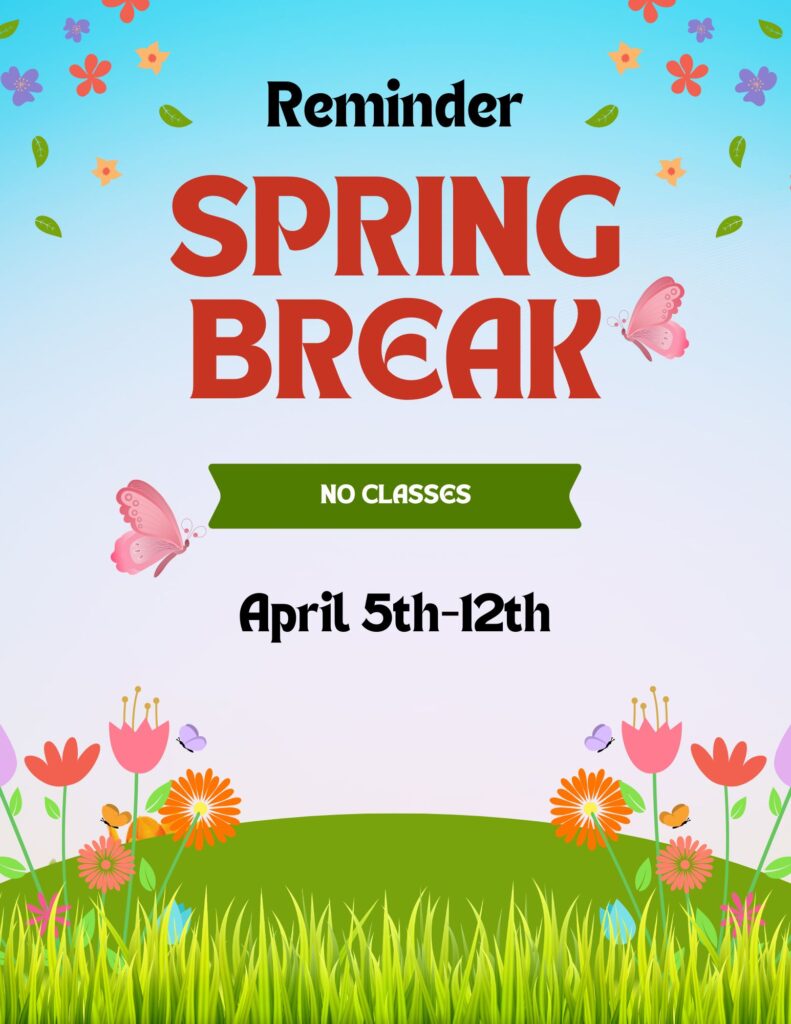
For our in studio students, we will be taking off from April 5th-12th. There are no makeups for this week. We will resume lessons as normal starting Monday, April 13th.
Meet Joselyn Ziecker – Piano Instructor
Joselyn specializes in working with young students and beginners, helping them build a strong foundation while developing confidence at the piano. With over 11 years of playing experience and a background in piano, cello, and choir, she brings a well-rounded, musical approach to every lesson.
Her teaching style is patient, encouraging, and highly personalized. Whether a student is brand new or has some experience, Joselyn focuses on making lessons engaging while building core skills like note reading, rhythm, and technique.
In the first few lessons, students start playing simple, recognizable songs by learning patterns, basic rhythms, and how to navigate the keyboard. Within 90 days, students can expect to play full songs, understand the fundamentals, and feel confident practicing on their own.
Joselyn is especially great for younger students and beginners who need structure, encouragement, and a positive first experience with music.
When she’s not teaching, you’ll find her playing piano, working on creative projects, or exploring her interest in real estate. Fun fact: she’s even appeared as a background extra on a few TV shows!
Alex's Cool Music Gear of the Month
One of the biggest challenges for musicians—especially beginners—isn’t motivation. It’s volume. Drums can shake the house, guitars can cut through walls, and even a simple practice session can feel like too much in a shared home. That’s where low-volume practice mutes come in. These simple tools are designed to reduce sound while still letting you play normally.
For drummers, rubber pad mute sets can sit directly on the drums and cymbals, bringing the volume way down without changing stick feel too much. Guitar players can use string dampeners or “fret wraps” to control extra noise and practice more cleanly. Even acoustic instruments like violin or piano have mute options that soften the sound significantly. The goal isn’t silence—it’s control.
What makes these tools so valuable is consistency. When volume is no longer a problem, students can practice more often without worrying about disturbing family members or neighbors. That usually leads to more total reps throughout the week, which is one of the biggest drivers of progress—especially for beginners.
Low-volume gear also removes friction. Instead of thinking, “I shouldn’t practice right now, it’s too loud,” students can just pick up their instrument and go. That small shift—making practice easier to start—can make a huge difference over time.
If you’ve ever felt limited by when or how often you can practice, this is one of the simplest upgrades you can make. It’s not flashy, but it’s incredibly effective—and sometimes the best gear is the kind that helps you show up more often.
Guitar Spotlight: Strumming Patterns That Make Songs Feel Alive
Strumming is what brings a song to life on guitar. You can know all the right chords, but without a steady and musical strum, the song can feel flat. Strumming controls the energy, feel, and movement of the music.
For beginners, start with simple down-up patterns. A basic down-up motion keeps your hand moving like a steady pendulum. Even if you miss the strings sometimes, keep the motion going. This helps your rhythm stay consistent. For example, try playing a G chord while counting “1 and 2 and 3 and 4 and” and strumming down on numbers and up on “and.”
As you improve, strumming becomes more about feel than just motion. You may skip certain strums or emphasize others. This is where syncopation begins. For example, leaving out a downstroke on beat two or adding an extra upstroke can change how the song feels. Small changes create a big difference.
At the intermediate level, accents and style come into play. Some strums should be stronger, while others stay light. This helps match different genres. A rock song might have strong downbeats, while a pop or acoustic song may feel softer and more flowing. The pattern stays similar, but the feel changes.
When practicing, start slow and keep your hand moving at all times. Focus on steady rhythm before adding complexity. Strumming is not just about hitting strings. It is about creating motion and feel. With time and consistency, your strumming will make every song sound more alive and connected.
Piano Spotlight: Chord Playing vs. Note-By-Note Playing
On piano, there are two main ways to play music. You can play notes one at a time, or you can play chords. Both are important, but they feel very different. Learning when to use each one helps your playing sound fuller and more musical.
For beginners, chords start with simple triads. A triad is three notes played at the same time, like C, E, and G. These are the building blocks of many songs. Playing chords helps you support melodies and create a strong sound, even with just a few notes.
At first, many students play songs one note at a time. This is great for learning melodies. But adding chords makes the music feel bigger. For example, instead of just playing a melody in your right hand, you can add a simple chord in your left hand to support it.
As players improve, chords become more flexible. Inversions allow you to play the same chord in different shapes. This helps your hands move less and keeps the sound smooth. Instead of jumping from one position to another, your fingers can stay close to the keys.
At the intermediate level, chords are often broken into patterns instead of played all at once. This is called a broken chord. You might play C, then E, then G in a steady pattern. These patterns are used in many styles and help create motion and rhythm in your playing.
When practicing, start slow and focus on smooth transitions between chords. Listen for even sound and relaxed hands. Chords are one of the fastest ways to make your playing sound full and confident, and learning how to use them well will open the door to many more songs.
Drum Spotlight: Fills That Don’t Ruin the Groove
Drum fills are exciting, but they can also cause problems. Many drummers play a great groove, then lose the timing when they add a fill. A good fill should support the music, not interrupt it. The groove should feel just as strong after the fill as it did before.
For beginners, start with simple one-bar fills. A common example is replacing the last beat of a measure with a few hits on the snare or toms. For example, on beat four, you might play four even notes on the snare instead of the usual pattern. Keep it simple and stay in time.
The most important part of a fill is landing back on beat one. Even a simple fill sounds great if it leads cleanly back into the groove. Practice going from a basic rock beat into a short fill, then right back into the beat without stopping. The transition matters more than the fill itself.
As drummers improve, fills become more connected to the music. Instead of random hits, they follow the shape of the phrase. For example, a fill at the end of four measures should feel like it completes that section. This helps the band stay together and makes the music feel organized.
At the intermediate level, transitions become smoother and more musical. Fills can move around the kit, use different dynamics, and match the energy of the song. Some fills are big and loud, while others are short and subtle. Knowing when to hold back is just as important as knowing when to play.
When practicing, start slow and keep the groove steady before and after the fill. Count carefully and focus on clean timing. A great drummer is not the one who plays the most fills, but the one who keeps the music feeling solid from start to finish.
Voice Spotlight: Why Warm-Ups Matter (And How to Do Them Right)
Warm-ups are one of the most important parts of singing, but they are often skipped. Your voice is a muscle, and it needs time to get ready. Jumping straight into a song can make your voice feel tight or strained. A good warm-up helps your voice feel relaxed, clear, and controlled.
For beginners, warm-ups should stay simple. Start with easy sounds like humming or “oo” and “ah.” Slide your voice up and down gently, like a siren. This helps your voice wake up without pressure. Keep the volume light and focus on smooth, steady sound instead of power.
As singers improve, warm-ups become more focused. Instead of doing the same exercise every time, you can target specific needs. If your high notes feel tight, use light scales that move upward. If your tone feels weak, work on steady, supported notes. The goal is to prepare your voice for what you are about to sing.
At the intermediate level, warm-ups help shape both range and tone. You might practice short patterns that move through your break or hold notes to build control. Pay attention to how your voice feels. If something feels tense, adjust and stay relaxed. Warm-ups should prepare your voice, not tire it out.
When warming up, start slow and stay consistent. Even five minutes can make a big difference. Think of it like stretching before exercise. A well-warmed voice responds better, sounds better, and stays healthier over time.
General Music Article: Music Is A Language
Music works a lot like a language. Instead of words, we use notes, rhythms, and patterns. When you first start learning, it can feel confusing, just like hearing a new language for the first time. But over time, the pieces begin to make sense.
For beginners, music starts with simple “words.” These are basic building blocks like single notes, simple rhythms, and small patterns. Learning a C chord on piano or a basic drum beat is like learning your first few words. They may seem small, but they are the start of everything.
As you grow, these small pieces begin to connect. Notes turn into short melodies. Chords start to follow common patterns. You are no longer just playing sounds. You are starting to understand how they fit together. This is where music begins to feel more natural.
At the intermediate level, music becomes more like full “sentences.” You can play longer phrases that have shape and direction. You begin to understand when something feels finished or when it needs to continue. This helps your playing sound more expressive and complete.
When you practice, think about learning music the same way you would learn to speak. Start small, repeat often, and build over time. You do not need to know everything at once. With patience and consistency, music becomes easier to understand and more fun to play.
Student Milestones
1 Month
Ava K.
Clara R.
Isabela S.
Justine C.
Emma C.
3 Months
Alice A.
Elijah D.
Elizabeth R.
Shayna R.
Aidan H.
Demetrie W.
6 Months
Kal-El C.
Clarence L.
Colin M.
Caia J.
Jayden T.
9 Months
Yaelly P.
Emilio C.
1 Year
Maria C.
Moriah Y.
JJ R.
Robin M.
Cecilia M.
Jason L.
Bill C.
18 Months
Elowen H.
Mara H.
Joelle S.
2 Years
Evelyn L.
Jacob C.