Upcoming Workshops
This Month’s Workshop:
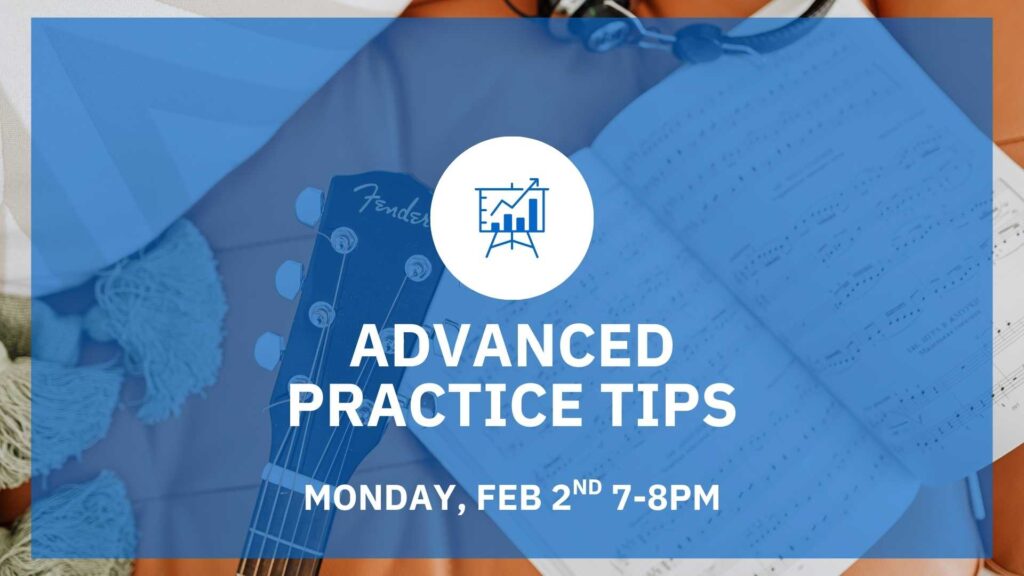
Advanced Practice Tips
When: Monday, Feb 2nd
Time: 7-8pm
Where: Online Zoom
Next Month’s Workshop:
Playing With Other People (Without Needing a Band)
When: Monday, March 2nd
Time: 7-8pm
Where: Online Zoom
Student of the Month
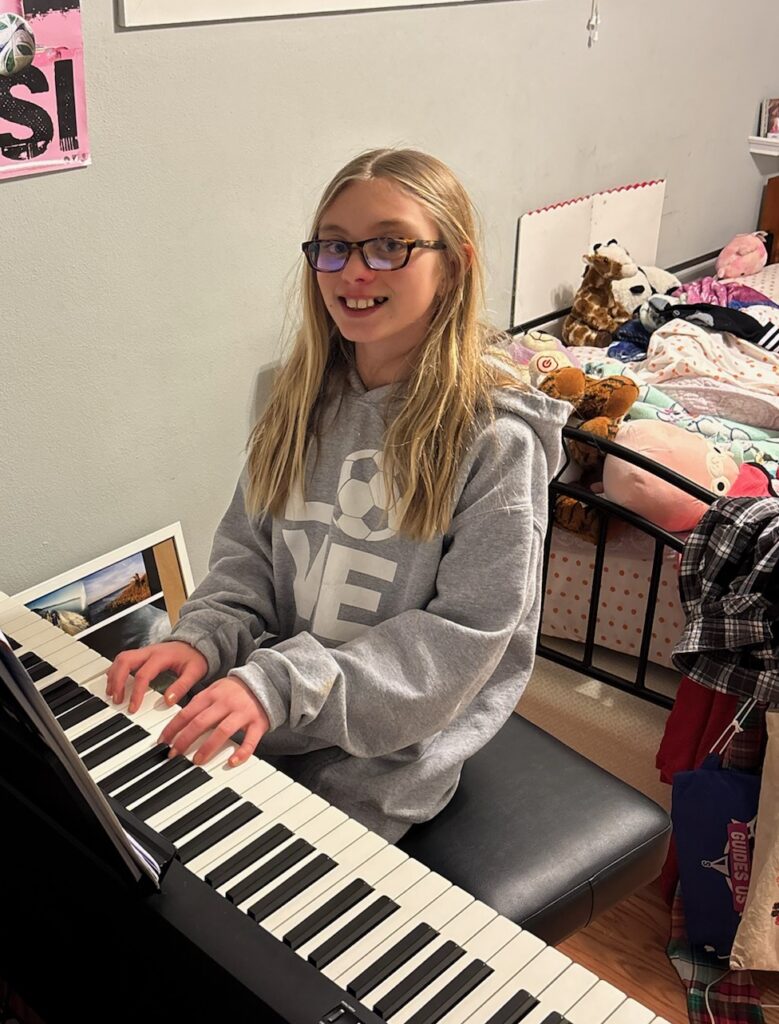
Yael is our first student of the month for 2026. For the first time, we’ve had two people from the same family be awarded a student of the month honor. Her grandma earned the award with us back in 2024.
Yael has a very strong work ethic. She earns the award not because of one outstanding achievement, but because her consistent work is a model example of what a solid plan and execution can do for you over a long enough period of time.
Keep working hard Yael. You’re on your way to not just being a great piano player for your age, but a great musician in general.
Name: Yael
Instrument: Piano
Time With Us: 6 Months
Favorite Song We’ve Learned So Far: Silent Night
Dream Song To Learn: Charlie Brown theme song by Vince Guaraldi
Victory Moments: I was worried that I wouldn’t like practicing and I didn’t know if I could commit. I also was worried about reading music. My grandma started lessons here first and then when I started I liked the teachers and feel good that I can ask my grandma for help if I have a question about a piece of music..
Alex's Cool Music Gear of the Month
One of the biggest challenges for beginners is staying steady with time. A clip-on vibration metronome solves this by letting students feel the beat instead of hearing clicks. It clips onto clothing or an instrument and pulses quietly.
This is especially helpful for drummers, pianists, and young students who get distracted by sound. It teaches steady timing without adding noise, which parents really appreciate during practice time.

Guitar Spotlight: Pick vs. Fingers
Your right hand controls how the guitar sounds. It affects volume, tone, and clarity. Most beginners notice right away that using a pick feels awkward. That is normal. New movements almost always feel uncomfortable at first, even when they are important.
Many beginners avoid the pick because it does not feel natural. In most cases, this is not a sign that picks are wrong for them. It usually means the pick is being held too tight, too loose, or at the wrong angle. Learning to hold it correctly and giving it time is part of the process. Avoiding it only delays progress.
Using a pick is especially important for clean rhythm playing. Simple downstrokes on one string help build control. Playing open strings or a basic chord pattern slowly helps the hand relax. The goal is not speed. The goal is a clean, even sound that stays steady.
Fingerstyle is a great option when it matches the music you love. Some styles truly need fingers, and that choice makes sense. The problem comes when fingers are used to avoid learning the pick. Skipping uncomfortable skills often blocks the exact progress students want, like playing songs smoothly or keeping strong rhythm.
When practicing, start slow and stay patient. Try the pick for short, focused sessions and listen for clean sound. Comfort comes from repetition, not avoidance. Learning to face the hard parts early makes everything else easier, and strong right hand control opens the door to better playing overall.

Piano Spotlight: Hand Independence
Piano can feel confusing at the beginning because each hand has a different job. One hand may play chords while the other plays a melody. Your brain is learning how to send two messages at the same time. That is why piano often feels harder at first than other instruments.
For beginners, the first goal is simple. Get both hands moving together, slowly. You might play middle C with the right hand while the left hand plays a low C. Even though the notes are different, they happen at the same time. This helps your hands learn to work as a team instead of fighting each other.
As skills improve, the hands start doing different things. The left hand may play steady notes while the right hand plays more movement. For example, the left hand might play whole notes while the right hand plays quarter notes. This is where piano starts to feel tricky, but also more musical.
At the intermediate level, students work on contrasting rhythms and touch. One hand may play smoothly while the other plays more sharply. This adds shape and emotion to the music. It is similar to walking while talking. At first it feels awkward, but over time it becomes natural.
The best way to practice hand independence is to slow everything down. Practice each hand alone first, then bring them together at a comfortable speed. Stay patient and listen carefully. Hand independence takes time, but once it clicks, piano starts to feel powerful and rewarding.

Drum Spotlight: Why Timing Matters More Than Speed
On drums, timing is everything. Drums are the backbone of the music. If the timing is shaky, the whole band feels it. Playing fast does not matter if the beat is not steady. A simple groove played in time will always sound better than fast fills that rush or drag.
For beginners, the goal is learning a steady pulse. This means keeping the beat solid from start to finish. Playing a basic rock beat with the kick on beats one and three and the snare on two and four is a great place to start. Each hit should land in the same place every time. Consistency is more important than speed.
As drummers improve, they learn subdivisions. This is how the beat is broken into smaller parts. For example, the hi-hat might play steady eighth notes while the kick and snare stay locked in. Subdivisions help your hands and feet stay organized and prevent rushing.
At the intermediate level, timing becomes groove. Groove is how relaxed and confident the beat feels. It’s where learning to emphasize certain beats makes the music come alive. Two drummers can play the same pattern, but the one with better timing will sound stronger and more musical. A good groove makes people want to move and keeps the band together.
When practicing drums, slow everything down and listen closely. Use a steady count and focus on even hits. Speed will come later. Strong timing is what makes a drummer reliable, and it is one of the most important skills you can build.

Vocal Spotlight: Your Breath Is Your Foundation
For singers, breath is the real instrument. Your voice rides on the air you send through it. When breath runs out too fast, notes feel shaky or tight. When breath is steady, singing feels easier and more controlled.
If you cannot hold a note very long, that is normal at first. Start by singing one comfortable note and timing how long it lasts. Then try again and aim to add just one more second. Do not push. Quiet, steady air lasts longer than loud air. Think of slowly fogging a mirror instead of blowing out candles.
To build better breath control, focus on how you breathe. Let your belly expand when you inhale, not your shoulders. Tall posture helps too. Stand or sit with your head up, chest relaxed, and feet grounded. Good posture gives your lungs more room to work.
As singers improve, breath helps shape longer phrases. You may sing a full line without stopping or hold a note smoothly at the end. If tension shows up, pause and reset. Relax your jaw, neck, and shoulders. Tension steals air faster than anything else.
When you practice, slow down and stay comfortable. Take breaks, breathe calmly, and focus on steady airflow. Breath control grows over time, not overnight. With patience and consistency, breathing will stop feeling like a struggle and start feeling like support for your voice.

General Music: How to Measure Progress Without Comparing Yourself
It is easy to feel stuck when you compare yourself to famous musicians or players you see online. Those players often have decades of experience, strong support teams, and thousands of hours behind them. Comparing your early steps to their highlight moments is not fair, and it hides real progress.
For beginners, progress shows up in small but important wins. Holding an instrument comfortably, playing one chord cleanly, or keeping a steady beat for a full song all count. These moments may not look impressive on their own, but they are the foundation everything else is built on. Skipping over these wins makes growth feel invisible when it is actually happening.
As skills grow, progress becomes more about consistency. Songs feel easier to start. Mistakes are easier to fix. You may not notice big jumps from week to week, but over a few months the difference is clear. This is where many students get discouraged, even though this stage is a sign they are on the right path.
At the intermediate level, comparing yourself to big musicians becomes especially dangerous. Professionals make hard things look easy because they have already struggled through the basics. What you do not see are the years of slow practice that came before. Tracking your own long-term growth through recordings, notes, or goals gives a much clearer picture of success.
The healthiest way to measure progress is by looking backward, not sideways. Ask yourself what you can do now that you could not do before. When progress is measured by effort, consistency, and patience, music stays rewarding, and confidence grows naturally over time.
Student Milestones
1 Month
Alice A.
Elijah D.
Elizabeth R.
Shayna R.
Aidan H.
Demetrie W.
Kristy P.
Waylon H.
3 Months
Augusto A.
Kellen C.
Kal-El C.
6 Months
Erik K.
William S.
Arthur D.
9 Months
Aaron S.
Anaka G.
1 Year
Brenda P.
Adriana O.
Parker O.
Cory N.
Daniel R.
Kuldeep M.
Belle B.
John S.
18 Months
Jane C.
2 Years
Henry K.
More News